
How the macro calculator works
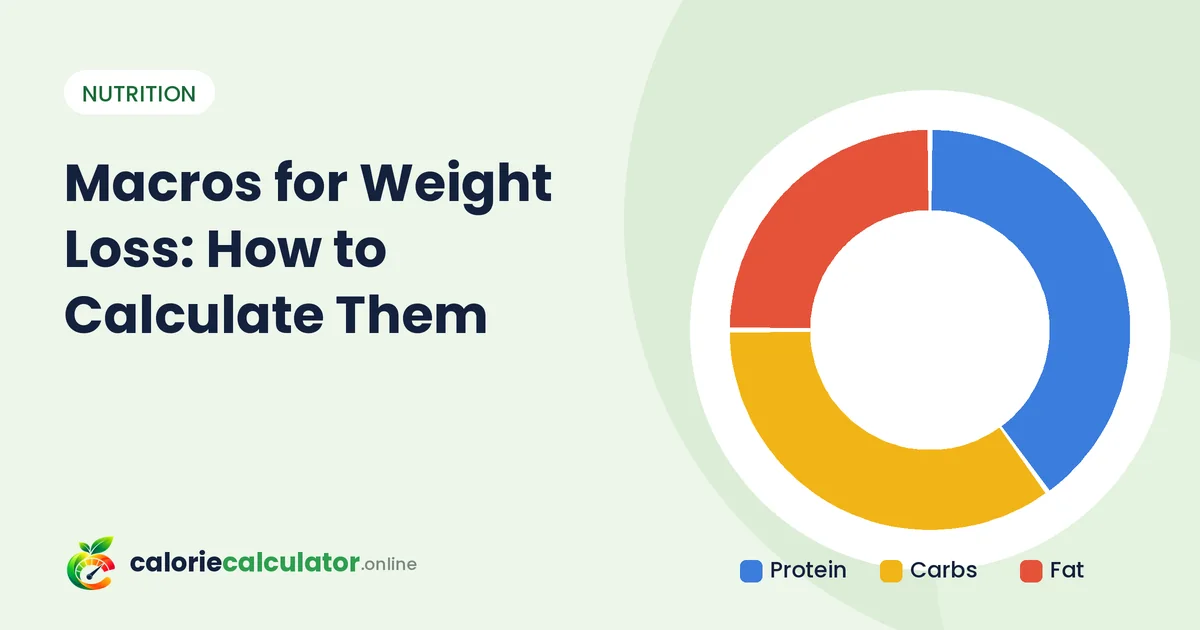
It starts with your daily calorie target, the same number the calorie calculator gives you for your goal. Then it splits those calories between the three macronutrients using the diet style you pick, and converts each share to grams.
| Diet style | Protein | Carbs | Fat |
|---|---|---|---|
| Balanced | 30% | 40% | 30% |
| High protein | 40% | 35% | 25% |
| Low carb | 35% | 25% | 40% |
| Keto | 25% | 5% | 70% |
Protein and carbs have 4 calories per gram, and fat has 9. So on a 2,000 kcal balanced plan, 30% protein is 600 kcal, or 150 g.
Which split should you choose?
Balanced suits most people and is the easiest to follow. High protein helps you stay full and keep muscle while losing fat. Low carb works well if you prefer meat, eggs, dairy and vegetables. Keto keeps carbs very low and is hard to stick to; it is best tried with advice from a professional.
The best split is the one you can keep up. Your total calories matter most for weight change, and protein matters most for muscle. See how much protein you need per day.
How to use the macro calculator
- Enter your details and choose a goal in "About you." The macro calculator uses the same daily calorie target as the calorie calculator.
- Pick a diet style: balanced, high protein, low carb or keto.
- Read your daily protein, carbs and fat in grams, plus protein per kg of body weight.
- Choose 3, 4 or 5 meals to see how much to eat at each meal.
Example macros for weight loss
At 2,240 calories a day on the high-protein split (40/35/25), you'd eat about 224 g protein, 196 g carbs and 62 g fat. Spread over four meals, that's about 56 g protein, 49 g carbs and 16 g fat per meal. On the balanced split, the same calories give about 168 g protein, 224 g carbs and 75 g fat.
Why protein comes first
If you only track one macro, track protein. It keeps you full, it costs more energy to digest, and it helps you keep muscle while you lose fat. Most active people do well at 0.7–1 g per lb of goal body weight. Check your number with the protein calculator.
Tips for hitting your macros
- Build every meal around a protein source, then add carbs and fats.
- Use a kitchen scale for rice, pasta, meat, oils and nut butters.
- Aim to be within about 10 g of protein and carbs and 5 g of fat most days.
- Recalculate whenever your weight changes by 10 lb or your activity changes.
For a full walkthrough with food lists and a sample day, read macros for weight loss: how to calculate and hit your macros.
Frequently asked questions
What are macros?
Macros, short for macronutrients, are the three nutrients that give you calories: protein, carbohydrates and fat.
What is a good macro split for weight loss?
A higher-protein split such as 40% protein, 35% carbs and 25% fat works well for many people, because protein keeps you full and helps protect muscle while you eat less.
Do I need to hit my macros exactly?
No. Getting within about 10 g of protein and carbs and 5 g of fat each day is close enough. Your weekly average matters more than any single day.
How many grams of protein should I eat?
Most active adults do well with 1.2–2.2 g of protein per kg of body weight (about 0.5–1 g per lb). Use the protein calculator for a personal number.
Comments & suggestions